Machame To the Roof of Africa – A Private 8-Day Kilimanjaro Climb — Machame Route
- 8 Days
Description
Duration
8 Days

Highlights
-
Classic Machame Route: An 8-day, 7-night program featuring 6 nights of camping on Mount Kilimanjaro.
-
Acclimatization Focus: Utilizes the "climb high, sleep low" strategy with a climb to Lava Tower ($4,630\text{ m}$) before descending to Barranco Camp ($3,960\text{ m}$) to maximize summit success.
-
Dedicated Support: Private group departure with a dedicated mountain crew, including a personal guide per pair of climbers on summit night.
-
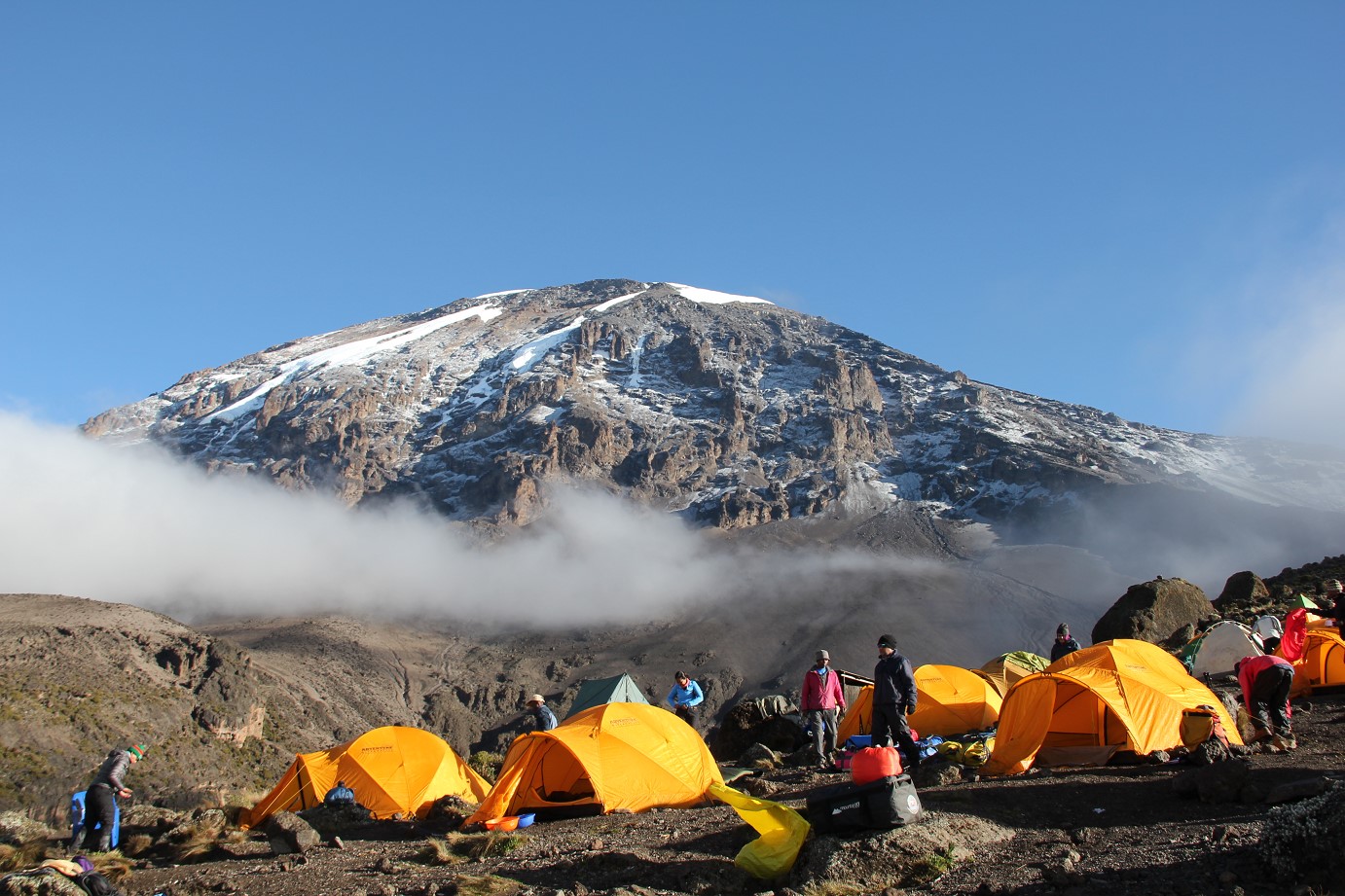
Scenic Landmarks: Features trekking through rainforests, moorland, alpine desert, scrambling up the Barranco Wall, and passing through Shira Cave, Karanga, and Barafu camps.
-
Safety & Equipment: Includes emergency oxygen, medical kits, tents, sleeping mattresses, and three meals daily prepared on the mountain.
-
Pre-Climb & Transfers: Includes arrival airport transfers, a pre-climb briefing, a night at Tulia Boutique Hotel in Arusha, and return gate transfers.
Included
- Park & Conservation Fees: All Kilimanjaro National Park entrance fees, camping fees, transit fees, and relevant government taxes. Guide & Support Crew: Professional climbing crew, experienced guides, and dedicated support staff. Summit Support: A dedicated personal guide for every pair of climbers during the summit-night push. Transfers & Ground Transport: All return transfers between the airport, Arusha hotel, Machame Gate, and Mweka Gate. Accommodations: Pre-climb lodging at Tulia Boutique Hotel in Arusha (1 night) and double-occupancy mountain camping in dome tents (6 nights). Meals & Hydration: Three meals a day prepared fresh on the mountain. Camping Gear: Sleeping mattress and dome tents provided at each campsite. Safety Equipment: Emergency oxygen tanks and a comprehensive medical kit carried by the mountain crew.
Excluded
- Flights: International airfare and international airport taxes. Visas: Entry visa fees for Tanzania. Insurance: Personal travel, trek cancellation, and high-altitude medical insurance. Climbing Gear: Personal trekking gear, cold-weather clothing, sleeping bags, and footware. Post-Climb Accommodation: Hotel stay on the final night (Day 8 after returning to Arusha). Gratuities: Tips for the mountain guides, cooks, and porters. Personal Spending: Souvenirs, laundry, alcoholic drinks, or soft beverages.
Travel Itinerary
Day 1 - Kilimanjaro Airport → Arusha
After you land, a transfer takes you to your hotel in Arusha. In the evening, your guides come by for a briefing — partly logistics, partly a chance to check that everything's in order before seven days on the mountain begin the next day. ROUTE MAIN EXPERIENCE MEALS OVERNIGHT Kilimanjaro Airport → Arusha Arrival and guide briefing Dinner Tulia Boutique Hotel, Arusha
Day 2 - Machame Gate → Machame Camp (3,000m)
Your guide and mountain crew meet you at the hotel for a short briefing before the drive to Machame Gate, Kilimanjaro National Park's southern entrance. Once climbing permits are sorted, the walk begins — straight into rainforest, so rain gear matters today more than any other. By the time you reach Machame Camp, the crew will already have tents up and dinner underway. ROUTE MAIN EXPERIENCE MEALS OVERNIGHT DRIVING TIME Arusha → Machame Gate → Machame Camp First trekking day, through rainforest Breakfast, Lunch, Dinner Machame Camp (3,000m) ~2–3 hrs to the gate
Day 3 - Machame Camp → Shira Cave Camp (3,800m)
An early start and a gradual climb toward Shira Plateau, where the tree line finally breaks and Kibo comes into view for the first time. The pace today is deliberately unhurried — gaining altitude slowly is the point, and there's time once you reach Shira Cave Camp to rest or walk the surrounding plateau before dinner. ROUTE MAIN EXPERIENCE MEALS OVERNIGHT ACTIVITY DURATION Machame Camp → Shira Cave Camp Gradual acclimatization trek Breakfast, Lunch, Dinner Shira Cave Camp (3,800m) ~4–5 hrs trekking
Day 4 - Shira Cave Camp → Lava Tower → Barranco Camp (3,960m)
Today's route climbs to Lava Tower at 4,630m before descending again to camp — the classic “climb high, sleep low” day that does more for acclimatization than almost anything else on the mountain. Expect some discomfort at altitude; that's part of why the schedule builds in time to sit with it before moving on. The descent brings you to Barranco Camp, beneath the Barranco Wall itself — imposing to look at, more straightforward to climb than it appears, which you'll find out tomorrow. ROUTE MAIN EXPERIENCE MEALS OVERNIGHT Shira Cave Camp → Lava Tower → Barranco Camp Acclimatization ascent to Lava Tower, then descent Breakfast, Lunch, Dinner Barranco Camp (3,960m) THE MATANGOS TOUCH The out-and-back to Lava Tower looks like a detour, but it's really the day doing the most work for your summit chances. Gaining altitude and then sleeping lower is one of the most reliable ways to acclimatize — the route is built around that, not around adding a view.
Day 5 - Barranco Camp → Karanga Camp
The Barranco Wall comes first thing, best tackled early before other groups crowd the trail — it's a scramble more than a technical climb, over in about ninety minutes. After that, the day settles into the steady rhythm of ridges and valleys on the way to Karanga Camp. A short acclimatization walk toward Barafu follows lunch, then back down to camp for the night. ROUTE MAIN EXPERIENCE MEALS OVERNIGHT Barranco Camp → Karanga Camp Barranco Wall scramble, then acclimatization walk Breakfast, Lunch, Dinner Karanga Camp
Day 6 - Karanga Camp → Barafu Summit Camp (4,640m)
A shorter day, and a deliberately quiet one — the walk to Barafu is your last before the summit attempt, and the crew will have camp ready so you can rest rather than spend the afternoon setting up. A brief acclimatization walk toward Kosovo Camp and back is the only real activity; the rest of the day is for eating, resting, and sleeping before a very early departure. ROUTE Karanga Camp → Barafu Summit Camp MAIN EXPERIENCE Short trek, rest before summit night MEALS Breakfast, Lunch, Dinner OVERNIGHT Barafu Camp (4,640m) TAKE YOUR TIME It's tempting to treat this as a rest day and fill it with movement. Resist that. The best preparation for summit night is genuinely doing as little as possible once you reach Barafu.
Day 7 - Barafu Camp → Uhuru Peak (5,895m) → Mweka Camp
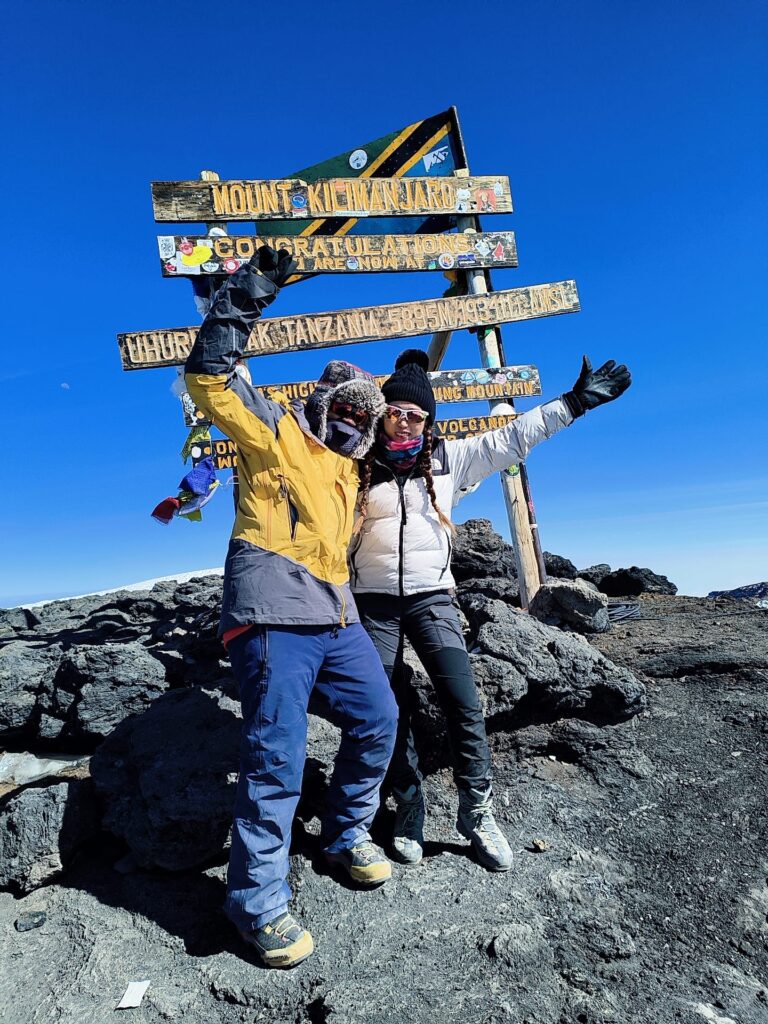
You'll leave Barafu at night for the push to Uhuru Peak. The climbing itself isn't technical — the real challenge is altitude, which affects everyone differently regardless of fitness. Each pair of climbers has a personal guide for the ascent, watching how you're doing rather than holding everyone to one pace. After Barafu, there's a two-hour rest before continuing the descent to Mweka Camp, back down in the rainforest. ROUTE Barafu Camp → Uhuru Peak → Mweka Camp MAIN EXPERIENCE Night summit attempt, descent MEALS Breakfast, Lunch, Dinner OVERNIGHT Mweka Camp (3,100m) A GUIDE'S PERSPECTIVE Reaching Uhuru Peak isn't something we can promise anyone — altitude affects people unpredictably, independent of how fit or prepared they are. What we can promise is a guide watching closely and making the call with you, not for you, when it matters.
Day 8 - Mweka Gate → Arusha
The last stretch down to Mweka Gate is a noticeably easier morning, both physically and in how the altitude eases off. At the gate, the group gathers to close out the climb together — lunch, a chance to compare notes, and certificates before the transfer back to Arusha. Accommodation isn't included for this final night — let us know if you'd like a return flight timed for the same day, or an additional night arranged. ROUTE MAIN EXPERIENCE MEALS Mweka Camp → Mweka Gate → Arusha Final descent, certificate presentation Breakfast, Lunch SUMMIT NIGHT — UHURU PEAK The night departure from Barafu Camp toward Uhuru Peak is the reason for the six days before it — everything on the route up to this point exists to get your body ready for this altitude. It's worth being clear-eyed about it: this isn't a technical climb, but it is a genuinely hard one, and reaching the summit depends on how your body handles the altitude on the night, which no amount of preparation can fully guarantee. What the route and the guiding can do is give you the best possible chance.
Maps
From $ 0
Book This Tour
Have a question in mind
Looking for more info? Send a question to the tour agent to find out more.
You might also like
Travel is my life. Since 1999, I have been traveling around the world nonstop. If you also love travel, you are in the right place!